
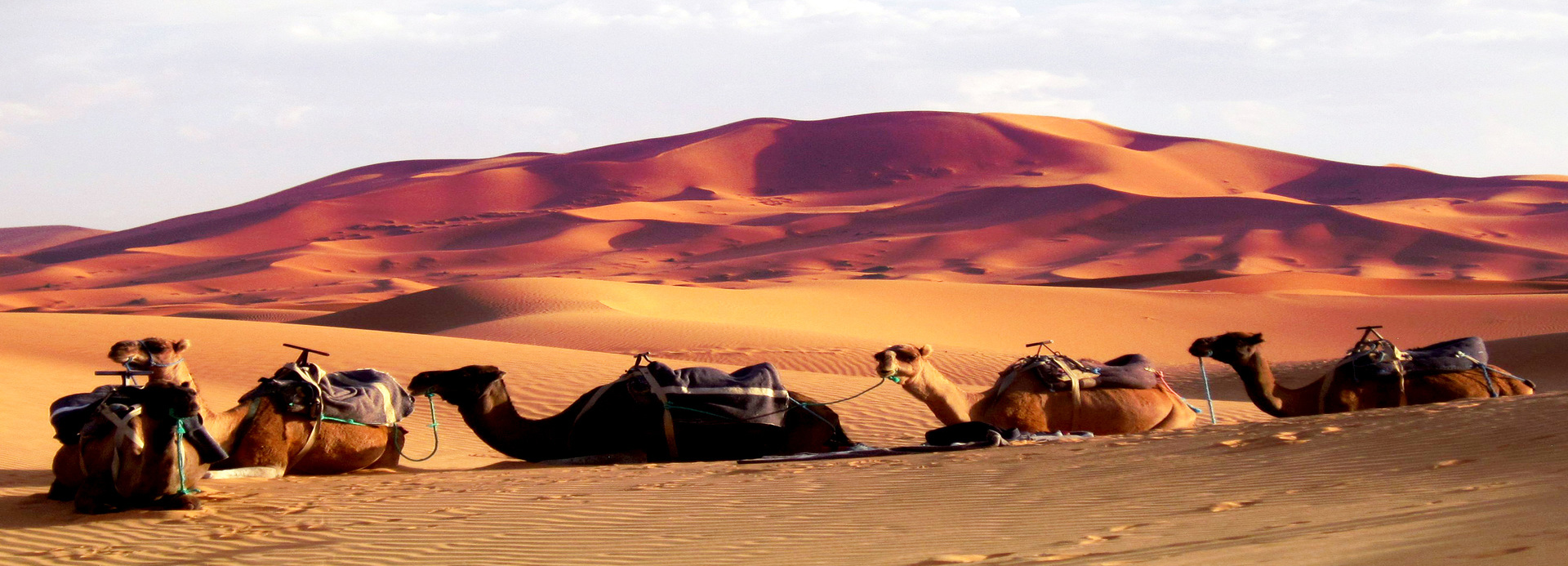
3 Day Fes to Merzouga Desert Tour
A private three-day route from Fes to the Erg Chebbi dunes, crossing the Middle Atlas, the Cedar Forest and the Ziz Valley, with a camel trek and a night in the Sahara.
A 3 day Fes to Merzouga trip is the fastest way to trade the Fes medina for the dunes of Erg Chebbi. In three days you cross the Middle Atlas, drop through the Ziz Valley, and reach the Sahara for a camel trek and a night under canvas. This page lays out the real route, what each day involves, what the desert camp is actually like, and how the trip compares to a longer four or five day version, so you can book with a clear picture rather than a guess.
Most travelers arrive in Fes with limited days left on their trip and want to know one thing: can a three-day loop actually deliver a proper Sahara experience, or does it feel rushed? The honest answer sits somewhere in the middle, and this guide is built to walk you through exactly where the trade-offs are, stop by stop, so nothing about your booking is a surprise.
3 Day Fes to Merzouga Trip at a Glance
| Detail | Information |
|---|---|
| Duration | 3 days / 2 nights |
| Start | Your hotel or riad in Fes |
| Finish | Back in Fes, or dropped off toward Marrakech on request |
| Tour type | Private, small group by default |
| Main route | Fes → Middle Atlas → Ziz Valley → Merzouga |
| Desert zone | Erg Chebbi dunes, Merzouga |
| Night 1 | Sahara desert camp, standard or upgraded tent |
| Activities | Camel trek, sunset and sunrise over the dunes, optional 4x4 excursion |
| Transport | Private air-conditioned vehicle with driver-guide |
| Meals | Breakfasts and dinners included on tour days; lunches are usually paid locally |
| Best for | Travelers with limited time who still want a real Sahara night |
| Main trade-off | A long first driving day in exchange for reaching the dunes quickly |
This itinerary pairs naturally with our wider Morocco desert tours collection. If your dates or group shape don't match a fixed three-day plan, our team can quote a private version around your exact travel window.
Is 3 Days Enough for Fes to Merzouga?
Three days is enough to see Erg Chebbi properly, but it asks a lot of Day 1. This section is here so you can decide honestly, not so we can talk you into the shortest option.
Who this itinerary suits
- Travelers with limited vacation days who still want a genuine Sahara night.
- Visitors who don't mind one long driving day in exchange for two full desert experiences.
- People combining Fes with a quick desert add-on before flying home.
- Travelers who are comfortable with early starts and late arrivals.
Who should choose 4 or 5 days instead
- Families traveling with young children who need more frequent stops.
- Older travelers who prefer shorter days behind the wheel.
- Anyone who wants real time in Ifrane, the Cedar Forest, or the Ziz Valley rather than a photo stop.
- Travelers who want two full nights in Merzouga instead of one.
If that sounds closer to your pace, our 4 day Marrakech desert tour and 4 day Morocco desert tour from Fes to Marrakech spread the same core route over an extra day.
How much driving is really involved
Day 1 is the long day: Fes to Merzouga covers the Middle Atlas mountains and the full length of the Ziz Valley before the desert. Day 2 stays local to Merzouga and Erg Chebbi, with much shorter distances covered on wheels. Day 3 retraces the route back, or continues toward Marrakech if you've booked the one-way version. Ask your travel consultant for the current estimated driving hours for your exact dates, since road conditions, season, and how many photo stops you want all affect the real total.
It helps to think of the three days in terms of effort rather than kilometers. Day 1 is the demanding one, spent mostly in the vehicle with scenery that changes constantly. Day 2 is the payoff day, built around the camel trek, the camp, and the dunes themselves. Day 3 is a mirror of Day 1, usually a little quicker since there are fewer new stops to make.
Travelers who have done long overland routes elsewhere in the world tend to find this pace manageable. Those who dislike more than a couple of hours in a car at a time are usually happier on a four-day version, where the same distance is split across an extra day with a lunch stop that isn't rushed.
3-Day Fes to Merzouga Route Map
There are two common endings for this itinerary, and it matters which one you book.
Round Trip: Back to Fes
Fes → Ifrane → Azrou → Middle Atlas → Midelt → Ziz Valley → Errachidia → Erfoud → Rissani → Merzouga → Erg Chebbi → return via the same route to Fes.
One-Way: On to Marrakech
Fes → Ifrane → Azrou → Midelt → Ziz Valley → Erfoud → Rissani → Merzouga → Todra Gorge → Dades Valley → Ouarzazate → Ait Ben Haddou → Marrakech.
Day 1: Fes to Merzouga via the Middle Atlas
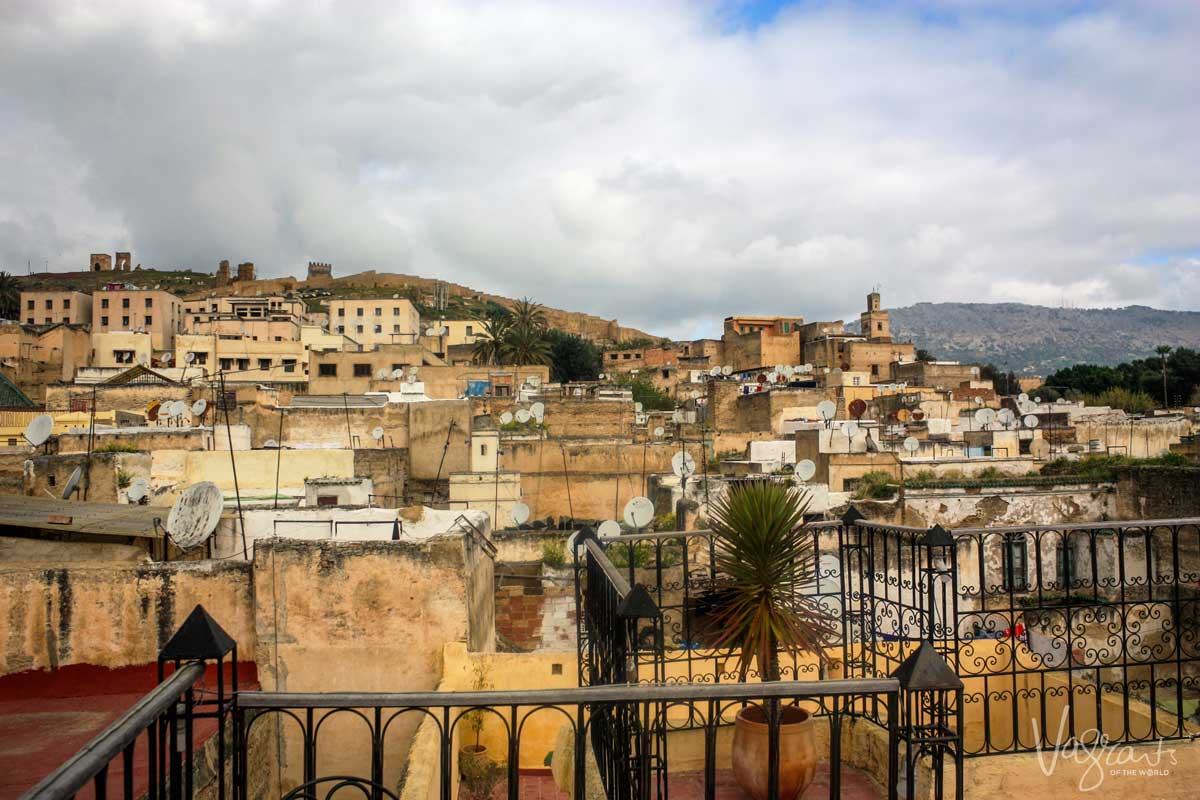
Pickup from your hotel or riad in Fes
Your driver-guide collects you early from your hotel, riad, or the Fes airport if you're arriving that morning. An early start matters on Day 1, since it gives you the best chance of reaching Merzouga with enough daylight left for the sunset camel trek.
If your riad sits deep in the medina where vehicles can't reach, we agree a nearby meeting point in advance so there's no confusion on pickup day. Bring a light day bag with water, snacks, and anything you'll want during the drive, since your main luggage will be stored in the vehicle for most of the day.
Ifrane, Morocco's alpine town
The road climbs into cooler air fast. Ifrane is a short stop with a completely different feel from Fes: European-style rooftops, pine trees, and a noticeably cooler climate, especially outside summer. Locals sometimes call it "Morocco's Switzerland," and the comparison makes sense the moment you step out of the car.
It's a stretch-your-legs stop rather than a long visit, usually just long enough for a coffee, a quick walk, and a few photos before continuing. In winter, Ifrane occasionally sees snow, which adds an unusual contrast to a trip that ends in the Sahara two days later.
Azrou Cedar Forest and the Barbary macaques
Past Ifrane, the road runs through cedar forest where wild Barbary macaques are often visible close to the roadside. These monkeys are one of the most photographed moments of the whole route, and sightings are common but never guaranteed, since they're wild animals moving through their natural habitat.
Guides ask visitors not to feed them, since human food affects their health and changes their natural behavior around vehicles. This stop is weather and traffic dependent, so timing can shift slightly depending on how the rest of the day is running.
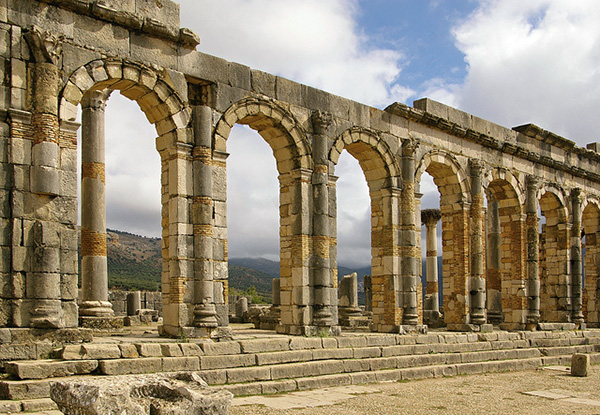
Midelt and the mountain crossing
The route continues through the Middle Atlas toward Midelt, a common lunch or rest stop roughly midway through the day's driving. The landscape shifts from cedar forest to bare mountain slopes lined with apple orchards, and the change happens faster than most first-time visitors expect.
This stretch is genuinely scenic but also where most of the day's driving hours are spent, so it's worth pacing your energy and staying hydrated. Midelt itself is a working mountain town rather than a tourist stop, which makes it a good place to see everyday Moroccan life away from the medinas.
Ziz Valley and Errachidia
Past the Atlas, the scenery changes sharply: palm groves line the Ziz River as the road drops toward the pre-Sahara. Viewpoints over the Ziz Valley are a highlight of the whole day, with terraced palm groves running for kilometers against the dry cliffs above them.
Errachidia serves as the last larger town before the desert region, and it's often used as a short break point before the final stretch toward Merzouga. From here, the landscape becomes noticeably drier and flatter with every passing kilometer.
Erfoud and Rissani
Erfoud is known for its fossil workshops, where ancient marine fossils found in the surrounding rock are cut and polished, a trade that has shaped the local economy for generations. Rissani, a little further on, was once a key stop on trans-Saharan caravan routes and still holds a lively traditional market.
Depending on timing, your driver may stop briefly at either before the final approach to Merzouga. These stops are optional and flexible, and your guide can skip or shorten them if daylight is running short before the camel trek.
Arrival in Merzouga and the sunset camel trek
On arrival, luggage is transferred to a 4x4 or left at your hotel, since only a small overnight bag travels by camel. From there, a local Amazigh handler leads your camel caravan into Erg Chebbi in time for sunset, walking at a slow, steady pace that suits complete beginners.
Reaching the desert camp for dinner, tea, and music around the fire is usually the moment travelers say makes the long driving day worth it. For the full mechanics of the ride itself, our guide to desert camp pricing in Morocco is a useful companion read.
Day 2: Erg Chebbi Desert Experience
Sunrise over the dunes
Most guests wake before dawn to watch the sun rise over Erg Chebbi, either from camp or a short walk up the nearest dune. The light changes quickly in the minutes around sunrise, shifting from deep blue to gold across the sand, and the desert is almost silent at that hour.
It's optional, and no one is forced out of bed for it, but it's usually the moment travelers remember most from the whole trip. Bring a warm layer, since desert mornings are colder than the daytime heat would suggest.
Breakfast and return from camp
After sunrise, breakfast is served at the camp: usually Moroccan bread, honey, olive oil, jam, and hot mint tea or coffee. Once everyone is ready, the return to Merzouga happens either back by camel or by 4x4 transfer, depending on your preference and the plan for the rest of the day.
Showers and a change of clothes are available once you're back at your hotel, which most travelers appreciate after a night with sand underfoot. This is also a natural point to repack for the return leg of the trip.
Optional Merzouga 4x4 excursion
Where included or added as an option, an afternoon 4x4 excursion can cover the wider dunes, a visit to a nomad family living at the edge of the desert, the Khamlia village known for its Gnawa music tradition, and sometimes a stop at a seasonal lake when water levels allow. Sandboarding is often available on request for travelers who want an extra activity on the dunes themselves.
These excursions run separately from the core itinerary, so confirm with our team in advance whether one is included in your quote or offered as a paid add-on for your specific dates.
Cultural experiences: Amazigh and Gnawa traditions
Depending on your exact itinerary, Day 2 can include a stop to hear Gnawa musicians in Khamlia, a cup of tea with a nomadic family, or simply more time exploring Merzouga itself. Gnawa music has deep roots in this region, blending rhythm, chant, and call-and-response singing that traces back generations.
These moments are usually the most memorable part of the desert stage precisely because they're unscripted: a conversation over tea, a song performed for its own sake rather than for a show. Photography is welcome, but it's worth asking first as a matter of courtesy.
Where you sleep on Night 2
On the standard 3-day round-trip version, Night 2 is typically back in a Merzouga hotel or riad rather than a second desert camp night, since Day 3 involves the long drive back to Fes. This keeps the schedule realistic without cutting into rest time before the return journey.
If you'd rather have two nights in the Sahara itself, ask about extending to our 4 day desert tour format, which builds in that extra night and spreads the driving over an additional day.
Day 3: Merzouga Back to Fes
Breakfast and departure
After breakfast, your driver-guide loads luggage and begins the return journey. An optional early stop in Rissani for last-minute shopping or a market walk is easy to arrange if you're not in a rush, and it's a good chance to pick up carpets, fossils, or spices directly from local sellers.
The return route
The drive back generally retraces Day 1: Rissani, Erfoud, the Ziz Valley, Errachidia, Midelt, Azrou, Ifrane, and finally Fes. Your driver may choose slightly different rest stops on the way back to break up the day and avoid repeating the exact same experience twice.
Because the scenery is already familiar by this point, Day 3 often feels shorter than Day 1 even when the driving time is similar, simply because there's less novelty pulling your attention away from resting.
Arrival and drop-off in Fes
Arrival time in Fes depends on how many stops you make and road conditions on the day. Drop-off can be at your hotel, riad meeting point, or the Fes airport if you have an evening flight. Confirm your onward travel plans with our team before booking so we can plan the return timing around them, especially if you have a flight booked the same evening.
Alternative Day 3: Merzouga to Marrakech
If you've booked the one-way version of this trip, Day 3 heads west instead of back north. This is the same route used on our 3 days from Fes to Marrakech through the desert tour.
Todra Gorge and Tinghir
The road climbs toward Tinghir and the towering rock walls of Todra Gorge, a short but striking walking stop between the desert and the mountains.
Dades Valley and the Road of a Thousand Kasbahs
Past Todra, the route runs through the Dades Valley, known for its kasbah architecture and dramatic rock formations, often called the Road of a Thousand Kasbahs.
Ouarzazate and Ait Ben Haddou
The route continues to Ouarzazate before a stop at the fortified village of Ait Ben Haddou, one of the most photographed kasbahs in Morocco, ahead of the Tizi n'Tichka mountain crossing into Marrakech.
Prefer to start this loop the other direction? Our 3 days from Marrakech to Fes through the desert and 3 day Marrakech desert tour pages cover the reverse routing.
What You See Between Fes and Merzouga
Every stop on this route earns its place in the itinerary for a different reason. Here's what each one actually adds to the trip.
| Stop | Why it's included |
|---|---|
| Ifrane | A cool mountain contrast to Fes, short photo stop |
| Azrou Cedar Forest | Wild Barbary macaques and cedar forest scenery |
| Midelt | Rest and lunch point mid-way through the mountains |
| Ziz Valley | The most scenic viewpoint of the whole drive, palm groves against arid cliffs |
| Erfoud | Regional fossil trade, optional workshop visit |
| Rissani | Historic caravan market town near Merzouga |
| Merzouga / Erg Chebbi | The main destination: camel trek, dunes, desert camp |
Taken together, these stops turn a single long drive into a genuine cross-section of Morocco: alpine forest, working mountain towns, palm-lined valleys, and finally the open Sahara. Few single routes in the country pack this much landscape variety into three days.
What Is Included?
Usually Included
- Private transport with driver-guide for the full route
- Camel trek into Erg Chebbi at sunset
- One night at a Sahara desert camp with dinner and breakfast
- Pickup and drop-off in Fes
- Fuel and driver costs for the full itinerary
Usually Extra
- Lunches on the road
- Drinks beyond tea and water at meals
- Tips for your driver and camel handler
- Luxury camp upgrades, quad bikes, and extra 4x4 excursions
- Travel insurance
Exact inclusions can vary slightly by season and comfort level, so we confirm a written breakdown before you pay any deposit. Nothing on this page should be treated as a final quote until our team has confirmed it for your dates.
Desert Camp Accommodation
Night 1 is spent at a Sahara camp inside or at the edge of Erg Chebbi. Two comfort levels are typically available.
| Feature | Standard Camp | Luxury Camp |
|---|---|---|
| Tent type | Shared Berber-style tent | Private tent, upgraded furnishing |
| Bathroom | Shared, short walk away | Private en-suite bathroom |
| Shower | Shared, cold or basic warm water | Private hot shower |
| Electricity | Limited, often solar or generator hours | More consistent, sometimes full evening power |
| Dinner | Shared Moroccan dinner with the group | Table service, sometimes a private setting |
| Best for | Budget-conscious travelers, solo trips | Couples, families, comfort-focused travelers |
Every camp night includes a traditional Moroccan dinner, mint tea, and music around the fire. For a fuller breakdown of what "luxury" actually means at different price points, see how much a luxury desert camp in Morocco really costs.
What a night at camp actually feels like
Camps sit inside or at the edge of Erg Chebbi, far enough from town that light pollution disappears almost completely once the fire dies down. Dinner is served communally in a large tent, usually tagine or couscous, followed by tea and a short set of Berber or Gnawa-style music around the fire.
Once the music ends, the desert goes quiet fast. Temperatures drop noticeably after dark even in warmer months, which is why the warm layer on your packing list matters more here than almost anywhere else on the trip.
Camel Trek or 4x4 Transfer?
The camel trek is the signature part of this trip, but it isn't the only way to reach the dunes.
- The ride into camp typically runs 45 minutes to just over an hour, timed for sunset.
- Camels are led by an experienced local handler at walking pace; no riding experience is needed.
- Travelers who can't or don't want to ride can request a 4x4 transfer to the same camp instead.
- Children are generally welcome from around five or six years old with an adult close by.
- In poor weather or extreme heat, timing may shift to protect both riders and animals.
If you have back or joint concerns, mention it when booking so we can arrange the 4x4 alternative in advance rather than on the day.
Our approach to camel welfare
The camels used on this route are worked in short, rotating stretches rather than back-to-back all day, with rest, shade, and water built into the handlers' routine. Loads are kept reasonable, the pace stays slow, and animals showing any sign of strain are swapped out rather than pushed through a trek.
If you'd rather not ride at all for personal or ethical reasons, tell us when booking. The 4x4 transfer to camp covers the same ground and means you still arrive in time for sunset and dinner.
Private or Shared Fes to Merzouga Tour?
Shared Tour
- Lower cost, fixed departure dates
- Vehicle shared with other travelers
- Less flexibility on stops and pace
- Good fit for solo, budget-focused travelers
Private Tour
- Flexible departure time and stop choices
- Vehicle exclusive to your group
- Easier to adjust the pace for families or older travelers
- Higher price, but easier to customize the route
Vehicle and Driver Information
Transport runs in a private, air-conditioned vehicle sized to your group, with a driver-guide who handles navigation, pacing, and local stop recommendations along the way. Luggage space, seat configuration, and whether the vehicle changes for the desert stretch all depend on your final group size, so we confirm these details once your booking is set.
Your driver-guide isn't just behind the wheel; they also act as your point of contact for questions about each stop, help coordinate the camel trek and camp handover in Merzouga, and are reachable throughout the trip if plans need to shift.
Why Travelers Book This Route With Us
- Local driver-guides who know the Fes-to-Merzouga road and its rest points well.
- Written, itemized quotes before any deposit is taken, so pricing is never a surprise on arrival.
- Flexible pickup arrangements for medina riads that vehicles can't reach directly.
- A genuine 4x4 alternative to the camel trek for travelers who need it.
- Support for special requests: dietary needs, mobility concerns, and family pacing.
How Much Does a 3-Day Fes to Merzouga Trip Cost?
Pricing depends on group size, camp comfort level, and whether you choose a private or shared tour. Rather than publish a number that may not match your dates, we quote every trip individually so the price you see is the price you pay.
As a general rule, private tours cost more per person for smaller groups and become more cost-effective as your group grows, since the vehicle and driver cost is shared. Luxury camp upgrades add a set supplement per person per night, separate from the base transport price.
What affects your final price
- Number of travelers in your group.
- Private versus shared tour type.
- Standard versus luxury desert camp.
- Season and demand around your travel dates.
- Any add-ons such as an extended 4x4 excursion or sandboarding.
How the booking process works
Send Your Dates
Message us with your travel dates, group size, and pickup point in Fes.
Get a Clear Quote
We reply with an itemized price covering transport, camp, and meals.
Confirm and Travel
Once confirmed, we send full pickup details ahead of your arrival.
Best Time to Travel from Fes to Merzouga
| Season | What to expect |
|---|---|
| Spring (Mar–May) | Mild days, cool nights, one of the best windows for the drive and the camel trek |
| Summer (Jun–Aug) | Very hot by midday in the desert; sunrise and sunset activities matter more than ever |
| Autumn (Sep–Nov) | Warm days and clear skies, ideal for stargazing at camp |
| Winter (Dec–Feb) | Cold desert nights; the Middle Atlas can see snow, which may affect the mountain road |
For a season-by-season breakdown across the whole country, see our guide to the best time to visit Morocco.
What to Pack for the Sahara
Is the Route Safe?
The Fes to Merzouga road is a well-traveled route used daily by tour operators, and driver-guides know the mountain sections and rest points well. Standard precautions apply: seatbelts on, regular driving breaks, and flexibility around weather, since snow can occasionally affect the Middle Atlas in winter.
Drivers pace the journey to avoid rushing through the mountain stretches, and stops are built in specifically so no one is sitting in the vehicle for hours without a break. Let us know in advance if you have any medical needs, mobility limitations, or dietary requirements so we can plan around them properly rather than adjusting on the road.
The desert camp itself follows its own routine of care: handlers know the dunes well, camp staff are on site through the night, and the route between camel drop-off and the tents is short and well-established.
Is This Trip Suitable for Families and Older Travelers?
- Families with children from around five or six are generally fine, especially with a private vehicle for extra flexibility.
- Older travelers with reasonable mobility usually manage well, since camels kneel for mounting and the vehicle stops regularly.
- Anyone with back, joint, or mobility concerns should mention it when booking so we can plan the 4x4 alternative for the camp transfer.
- Pregnant travelers should check with a doctor before the camel trek and let us know so we can adjust the plan.
- Travelers with dietary needs (vegetarian, vegan, halal, or allergies) can be accommodated at the camp with advance notice.
- Solo travelers are welcome on both private and shared departures, and many find the shared desert camp evening a good way to meet other travelers.
If any of these apply to your trip, mention it as early as possible in the booking conversation. Small adjustments, like a shorter camel ride or an earlier departure, are much easier to arrange in advance than on the day itself.
3 Days vs 4 Days vs 5 Days
| Duration | Main advantage | Main trade-off | Best for |
|---|---|---|---|
| 3 days | Fastest way to reach the Sahara | Long first driving day, one desert night | Short holidays, limited time |
| 4 days | More balanced pace, extra stop time | One more night of accommodation cost | Most travelers |
| 5 days | Relaxed pace, two full desert nights possible | Requires more vacation days | Slow, immersive travel |
If a longer pace appeals to you, compare this trip against our 5 day Morocco desert trip from Fes to Marrakech or the 4 day trip from Fes to Marrakech through the desert, both of which slow down the same core route.
Can You Travel from Fes to Merzouga Without a Tour?
Public transport and self-driving are both technically possible, but neither replaces the coordination a private tour provides. Self-driving means navigating unfamiliar mountain roads and arranging your own camp transfer once you reach Merzouga. A private tour keeps the pacing, stops, and desert logistics handled from pickup to drop-off, which is why most travelers choose it for a route this specific.
Explore More Morocco Desert Routes
This 3-day Fes to Merzouga trip is one entry point into a wider set of routes we run across Morocco. Browse the closest matches below, or head to our full Morocco desert tours overview to compare every itinerary.
Similar Fes and Merzouga Routes
Longer Morocco Itineraries
Frequently Asked Questions
Is 3 days enough for a Fes to Merzouga trip?
Yes, if reaching Erg Chebbi and experiencing one Sahara night matters more than a relaxed pace. Day 1 is long, so travelers wanting shorter driving days should look at a 4 or 5 day version instead.
How long does the drive from Fes to Merzouga take?
It's a full travel day covering the Middle Atlas, Ifrane, Azrou, Midelt and the Ziz Valley. Exact hours vary with stops, weather, and road conditions, so confirm current estimates with our team for your dates.
What places do you visit between Fes and Merzouga?
The route passes through Ifrane, the Azrou Cedar Forest, Midelt, the Ziz Valley, Errachidia, Erfoud and Rissani before reaching Merzouga and the Erg Chebbi dunes.
Does the tour include a night in the Sahara?
Yes, Night 1 is spent at a desert camp in Erg Chebbi with dinner, mint tea, and music, reached by camel trek at sunset.
Is the camel trek included, and can I skip it?
The camel trek is included as standard, but a 4x4 transfer to the same camp is available for travelers who prefer not to ride.
Is the tour private or shared?
Private is the default and most booked option, with a shared version available at a lower cost on fixed departure dates.
What is included in the price?
Private transport, driver-guide, the camel trek, one desert camp night with dinner and breakfast, and pickup and drop-off in Fes. Lunches, drinks, and tips are usually extra.
How much does the tour cost?
Price depends on group size, camp comfort level, and private versus shared choice. Send us your dates for an exact, itemized quote.
Can I bring luggage to the desert camp?
Your main suitcase usually stays at your hotel or in the vehicle, with only a small overnight bag traveling by camel to the camp.
What is the best time to do this trip?
Spring and autumn offer the most comfortable balance of daytime warmth and cool desert nights. Summer is hot by midday, and winter nights in the desert and Middle Atlas can be cold.
Is this trip suitable for children and older travelers?
Generally yes, especially with a private vehicle. Children from around five or six can usually ride, and older travelers with reasonable mobility manage well, with a 4x4 alternative available if needed.
Can I finish the tour in Marrakech instead of Fes?
Yes, a one-way version continues from Merzouga through Todra Gorge, the Dades Valley, Ouarzazate and Ait Ben Haddou to Marrakech. Confirm this option when booking.
Should I choose 3, 4, or 5 days?
Choose 3 days for the fastest route to the Sahara, 4 days for a more balanced pace, and 5 days if you want two full nights in the desert and a slower overall trip.
Book Your 3-Day Fes to Merzouga Trip Today
Send us your travel dates and group size, and we'll confirm the route, camp comfort level, and total price within a few hours.
Or visit our contact page for more ways to reach our travel team.