
The best time to visit Morocco is April, May, September, and October, when temperatures across Marrakech, Fes, the Sahara Desert, and the Atlas Mountains settle into a comfortable 20–28°C (68–82°F) range with low rainfall. Beyond that general rule, the right month depends on what you’re planning:
- Best overall: April, May, September, October
- Best for the Sahara Desert: March–May and September–November
- Best for surfing: October–March for the biggest swells; June–September for beginners
- Cheapest months: January, February, November
- Avoid if you dislike heat: July–August, when inland cities and the Sahara regularly pass 40°C (104°F)
- Avoid if you dislike cold nights: December–January in the desert and mountains
Why Timing Matters: Morocco Isn’t One Climate
Morocco packs four distinct climates into a single country, so when to go to Morocco doesn’t have one universal answer – it depends on where you’re headed. A perfect week on the coast in August can overlap with a genuinely uncomfortable one in Marrakech at the exact same time. This guide covers Morocco weather by month, the best time to visit Morocco for specific cities and activities, festival timing, and the trade-offs of each season, so you can match your dates to the trip you actually want.
If a Sahara crossing is part of your plan, our Morocco desert tours run through every season, and the notes below will help you pick the window that suits you rather than guessing.
Morocco’s Climate Zones Explained
Morocco’s Atlantic coastline, semi-arid interior, alpine mountains, and true desert behave almost independently of one another. Understanding this is the real answer to “morocco best time to visit” questions, because the honest answer is always regional.
| Region | Climate Type | What to Expect | Best Time to Visit |
|---|---|---|---|
| Atlantic Coast (Casablanca, Rabat, Essaouira, Agadir, Tangier) | Mediterranean / Atlantic | Mild year-round, cooling sea breeze | Year-round; June–September for beaches |
| Imperial Cities (Marrakech, Fes, Meknes) | Hot semi-arid | 40°C+ summers, cool winter nights | March–May, September–November |
| Sahara Desert (Merzouga, Zagora, Agafay) | True desert | 45°C+ summer days, near-freezing winter nights | October–April |
| Atlas Mountains (High Atlas, Toubkal, Imlil) | Alpine | Snow December–March, cool summers | April–June, September–October |
Morocco’s Seasons at a Glance
Spring in Morocco (March–May)
Spring is widely considered the single best season to visit Morocco, with temperatures around 15–28°C and blooming landscapes across the Atlas Mountains and the Dades Valley. It’s comfortable almost everywhere, the Sahara is accessible without extreme heat, and the calendar includes the Rose Festival, the Marathon des Sables, and the Fes Sufi Festival. The trade-off: Easter brings crowds, and prices climb steadily from March into May, so desert camps and car rentals are worth booking early.
Summer in Morocco (June–August)
Summer is Morocco’s hottest and most polarized season – glorious on the coast, brutal inland. Essaouira, Agadir, and Casablanca stay around 22–28°C thanks to the Atlantic breeze, with beach season and festivals like Gnaoua and Jazzablanca in full swing. Marrakech and Fes, meanwhile, routinely hit 37–45°C, and most luxury Sahara camps reduce or pause operations. Summer works well for coastal trips and mountain escapes, but it’s the wrong season for a desert tour or all-day city sightseeing.
Autumn in Morocco (September–November)
Autumn is spring’s closest rival for the best time to go to Morocco – heat fades, crowds thin out, and desert conditions turn close to ideal from October onward. Expect 17–32°C tapering down through the season, plus the date harvest around Erfoud and the Imilchil Marriage Festival in the High Atlas. Early September can still run hot in the south, and rain picks up in the north by late November, but October in particular is hard to beat for an all-region trip.
Winter in Morocco (December–February)
Winter is Morocco’s budget season: cooler, wetter, and far less crowded, with a genuinely striking side in the Sahara and Atlas Mountains. Cities stay mild by day (10–20°C) but cool off sharply at night, desert temperatures can drop near or below freezing after dark, and snow dusts the High Atlas – Oukaimeden even runs as a ski resort. The upside is the lowest prices of the year and clear-sky stargazing in the dunes; the downside is that many traditional riads have no central heating and some desert camps close for the season.
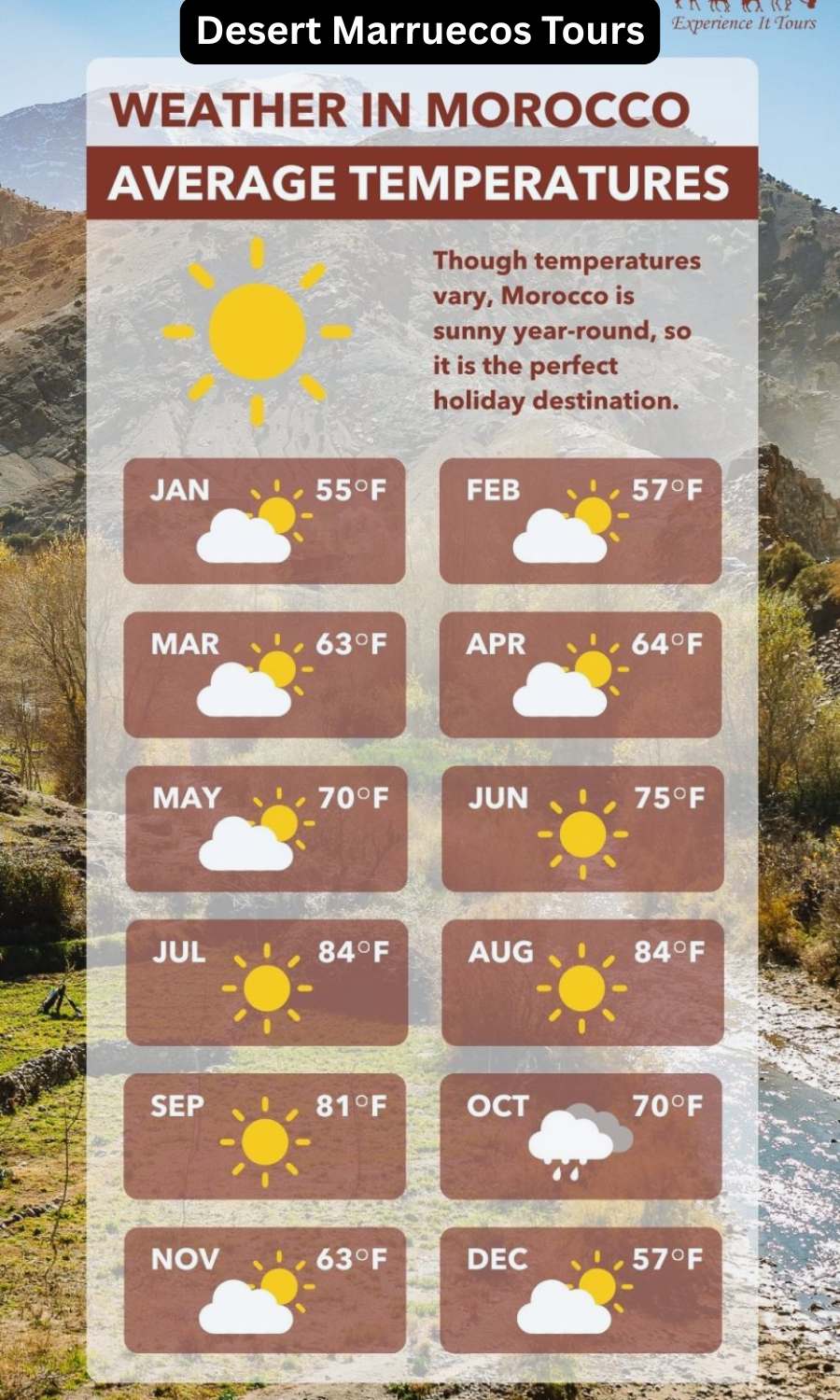
Morocco Weather by Month
Morocco temperature by month varies sharply between the coast, the cities, and the desert, so the table below breaks out all three.
| Month | Marrakech (°C) | Sahara Day / Night (°C) | Casablanca (°C) | Rainfall | Crowds & Price |
|---|---|---|---|---|---|
| January | 10–20 | 18–22 / 0–5 | 8–17 | High | Low – cheapest |
| February | 11–21 | 20–25 / 3–8 | 9–18 | High | Low – budget-friendly |
| March | 15–25 | 25–28 / 8–12 | 11–20 | Moderate | Rising |
| April | 18–28 | 28–32 / 12–16 | 13–22 | Low | High – Easter |
| May | 20–28 | 32–36 / 16–20 | 15–24 | Low | High |
| June | 25–35 | 38–42 / 22–26 | 18–27 | Very low | Moderate; coast busy |
| July | 30–40+ | 42–48 / 25–30 | 20–28 | Minimal | High on coast |
| August | 30–45 | 43–50 / 26–32 | 20–29 | Minimal | Highest on coast |
| September | 22–32 | 35–38 / 20–24 | 19–27 | Low | Moderate |
| October | 18–28 | 28–32 / 14–18 | 16–24 | Moderate | High – peak desert season |
| November | 14–24 | 22–26 / 8–12 | 13–21 | Moderate | Low–moderate |
| December | 10–20 | 18–22 / 2–6 | 10–18 | High | Low, except Christmas week |
Month-by-Month Highlights
January – Morocco’s coldest and wettest month, but also its cheapest and quietest. Daytime desert temperatures stay pleasant even though nights drop near freezing, and Yennayer, the Amazigh (Berber) New Year, falls in mid-January.
February – Similar to January but warming slightly by month’s end. The Almond Blossom Festival in Tafraoute turns the surrounding valleys pink and is one of the best reasons to visit during deep low season.
March – Spring arrives: green hillsides, clearing skies, and Atlas Mountains snowmelt opening up trekking routes. The International Nomads Festival runs near M’Hamid on the desert’s edge.
April – Frequently cited as the best month to visit Morocco: warm, dry, and blooming everywhere. Crowds climb around Easter, and this is when the Marathon des Sables ultramarathon crosses the Sahara.
May – Late spring’s last comfortable window before summer heat sets in, and a strong contender for best time of year to visit Morocco overall. The Rose Festival in Kelaa M’Gouna, in the Dades Valley, celebrates the rose harvest with parades and perfume-making.
June – Summer arrives inland while the coast stays lively and cool. Essaouira hosts the Gnaoua World Music Festival; Fes holds its Festival of World Sacred Music.
July – One of the two hottest months in Morocco; inland cities and the Sahara turn extreme. Coastal towns absorb the overflow, and Casablanca hosts Jazzablanca.
August – Morocco’s single hottest month, with Marrakech and the Sahara both capable of exceeding 43°C. The Atlantic coast is at its busiest and most expensive.
September – Heat starts breaking and crowds thin from the summer peak, which is why this month is often named among the best times to visit Morocco for avoiding both extremes. The High Atlas hosts the Imilchil Marriage Festival.
October – Many travelers call this the single best time of year to visit Marrakech and the desert together: comfortable everywhere, ideal Sahara conditions, and date-harvest season around Erfoud. Book desert camps and 4×4 tours several weeks ahead.
November – A quieter, cheaper follow-on to October, with early-month desert conditions still excellent. Rain becomes more frequent toward the north as the month progresses.
December – Cool, occasionally wet, and Morocco’s other budget window outside Christmas week. Snow dusts the Atlas Mountains, Sahara nights are genuinely cold, and clear skies make for dramatic stargazing.
Best Time to Visit Morocco for Different Activities
Match your dates to what you actually want to do – Morocco rewards planning around activity, not just season.
| Activity | Best Months | Avoid |
|---|---|---|
| Sahara Desert safari | March–May, September–November | June–August (40–50°C) |
| Camel trekking | April, May, October, November | – |
| Desert camping / luxury camps | October–April | June–August, many camps close |
| Atlas Mountains hiking | April–June, September–October | July–August (heat), December–February (snow at altitude) |
| Mount Toubkal trek | May, June, September, October | April (snow underfoot), winter (technical gear required) |
| Surfing (biggest waves) | October–March | – |
| Surfing (beginners) | April–June, September | – |
| Kitesurfing, Essaouira | April–September | – |
| Kitesurfing, Dakhla | November–March | – |
| Beaches & swimming | June–September | – |
| Photography | April, May, September, October | – |
| Honeymoon / romantic travel | April, May, September, October, November | – |
| Family holidays | April–May, September–October | July–August, too hot for kids |
| Road trips | March–May, September–November | – |
| Birdwatching | Spring and autumn migrations | – |
Is the Sahara too hot in summer? Yes – by June, Merzouga and Zagora regularly hit 38–42°C during the day, and most reputable operators scale back or close their luxury camps by July and August. Is it too cold in winter? Nights can drop to 0°C or below, but daytime temperatures stay pleasant (18–25°C), which is why October through April remains the standard booking window for Sahara Desert tours from Marrakech and Fes. If you’re weighing how many nights to spend in the dunes and what that costs, our guide to luxury desert camp pricing breaks down what’s included at each tier.
Best Time to Visit Morocco by Destination
City-level timing matters more than most guides admit – Fes and Chefchaouen sit only a few hours apart but behave very differently in August.
| Destination | Best Months | Why |
|---|---|---|
| Marrakech | March–May, September–November | Avoid July–August (40°C+); comfortable medina and day-trip weather otherwise |
| Fes | March–May, September–November | Slightly cooler than Marrakech but similarly hot in summer |
| Chefchaouen | April–June, September–October | Mountain elevation keeps even summer bearable |
| Casablanca | Year-round | Mild Atlantic climate; June–September best for beaches |
| Essaouira | May–September (beach), October–March (surf) | Constant wind keeps it cool even in August |
| Tangier | May, June, September, October | Mediterranean climate, mild year-round |
| Sahara Desert (Merzouga, Zagora) | October–April | See activity table above |
| High Atlas | April–June, September–October | Trekking season; snow December–March |
| Dades Valley / Todra Gorge | March–May, September–October | Rose Festival season; green after winter rain |
| Ouarzazate | March–May, September–November | Gateway to the desert; same heat pattern as the Sahara |
| Dakhla | November–March | Peak kitesurfing wind |
Marrakech stays comfortable enough for day trips into the Atlas Mountains or the Agafay Desert for most of the year – our Marrakech day trips page covers the main options – but plan indoor time between roughly noon and 4pm if you’re visiting in July or August. Pairing Marrakech with Fes? Our 4-day Marrakech to Fes route runs through the desert between the two cities rather than backtracking.
Cheapest Time to Visit Morocco
January, February, and November are the cheapest months to visit Morocco, with hotel and tour prices typically 20–40% below the April–May and October peaks.
| Season | Hotel & Tour Prices | Crowds |
|---|---|---|
| Peak (April–May, October) | High | High |
| Shoulder (March, early June, September, November) | Moderate | Moderate |
| Low (January–February, December excl. Christmas) | Low | Low |
September and November are worth a specific mention: they combine near-shoulder-season pricing with weather that’s only marginally behind the April–May peak, which makes them the best value window on the calendar for most travelers.
When Should You Avoid Visiting Morocco
- Winter mountain snow: December–February can close High Atlas passes, including routes toward Toubkal
- Peak-price weeks: Christmas/New Year (December 22–January 7) and Easter week both spike prices – book three to four months ahead
- Chergui winds: hot, sand-laden winds are most common March–May and September–October; they’re usually brief but can reduce visibility for a day
Best Time to Visit Morocco by Traveler Type
| Traveler Type | Best Months | Why |
|---|---|---|
| Families with kids | April–May, September–October | Comfortable heat, school-holiday alignment |
| Couples / honeymoon | April, May, September, October, November | Warm days, cool romantic evenings |
| Solo travelers | March–May, September–November | Group tours run most often; January–February for a quieter, cheaper solo trip |
| Budget travelers | January, February, November | Lowest prices of the year |
| Luxury travelers | April, May, October, November | Peak desert-camp and riad availability |
| First-time visitors | April, May, September, October | Full access to every region at once |
| Adventure travelers / hikers | April–June, September–October | Core trekking season |
| Surfers | October–March | Biggest, most consistent swells |
| Digital nomads | March–May, September–November | Comfortable working weather, reliable connectivity in Marrakech and Casablanca |
Morocco Festivals and Events by Month
| Month | Festival | Location |
|---|---|---|
| January | Yennayer (Amazigh New Year) | Nationwide |
| February | Almond Blossom Festival | Tafraoute |
| March | International Nomads Festival | M’Hamid El Ghizlane |
| April | Marathon des Sables; Sufi Festival | Sahara Desert; Fes |
| May | Rose Festival | Kelaa M’Gouna, Dades Valley |
| June | Gnaoua World Music Festival; Festival of World Sacred Music | Essaouira; Fes |
| July | Jazzablanca | Casablanca |
| September | Imilchil Marriage Festival | High Atlas |
| October | Erfoud Date Festival | Erfoud |
| December | Christmas & New Year celebrations | Marrakech, Fes, and other tourist hubs |
Ramadan and Eid al-Fitr aren’t fixed to a specific month – they follow the Islamic lunar calendar and shift roughly 10–11 days earlier every year, so check the current-year dates before you book.
Visiting Morocco During Ramadan
Yes, you can visit Morocco during Ramadan – and many travelers find it worthwhile – but the daily rhythm changes noticeably. In non-tourist neighborhoods, many restaurants close during daylight hours; in tourist-heavy areas like the Marrakech medina, most stay open. Hotels continue serving meals to guests as normal.
The real draw is the evening: iftar meals, night markets, and street food stalls come alive after sunset, often with more energy than the rest of the year combined. If you visit during Ramadan, eat and drink discreetly in public during daylight out of respect for those fasting, and expect a slower pace before sunset and a livelier one after.
Morocco Weather Realities: What Guidebooks Don’t Always Tell You
Is Marrakech Really Unbearable in July and August?
For most travelers, yes, without a plan. Marrakech regularly hits 37–45°C (99–113°F) in July and August, and the medina’s stone walls hold heat well into the evening. The workaround most locals use: sightsee from roughly 7–11am, retreat to a pool or a shaded riad courtyard from late morning through mid-afternoon, then head back out once the sun drops.
Where Can You Escape the Summer Heat?
Essaouira and Agadir stay around 22–28°C thanks to constant Atlantic wind, even in the middle of August. If you’d rather have elevation than coastline, Imlil and other High Atlas villages run noticeably cooler and breezier than the plains below, while still being an easy day trip from Marrakech.
Do Moroccan Riads Have Heating in Winter?
Often not. Many traditional, budget riads rely on thick mud-brick walls that keep interiors cold well into the day during December–February, sometimes colder than it feels outside in the sun. Before booking a winter stay, ask specifically whether the room has a split-system unit with a heat mode – “heating” alone can mean anything from a small space heater to nothing at all. Pack a warm layer and thermal sleepwear for lounging indoors.
Is the Sahara Actually Freezing at Night in Winter?
Yes. Sand loses heat fast once the sun sets, and desert camp nights from December through February regularly drop to 0–5°C (32–41°F). Reputable operators issue heavy wool blankets for warmth, and at the luxury tier, offer enclosed tents with private, heated bathrooms – worth confirming directly when you book rather than assuming it’s included.
What to Pack for Morocco by Season
| Season | What to Pack |
|---|---|
| Spring (March–May) | Light layers, sun protection, a light jacket for evenings, comfortable walking shoes |
| Summer (June–August) | Breathable, loose clothing, a wide-brimmed hat, high-SPF sunscreen, a reusable water bottle |
| Autumn (September–November) | Layers – warm early in the season, cooler by November – plus a light jacket |
| Winter (December–February) | A warm coat, thermal layers, closed-toe shoes, and a heavy blanket or sleeping-bag liner for desert camps |
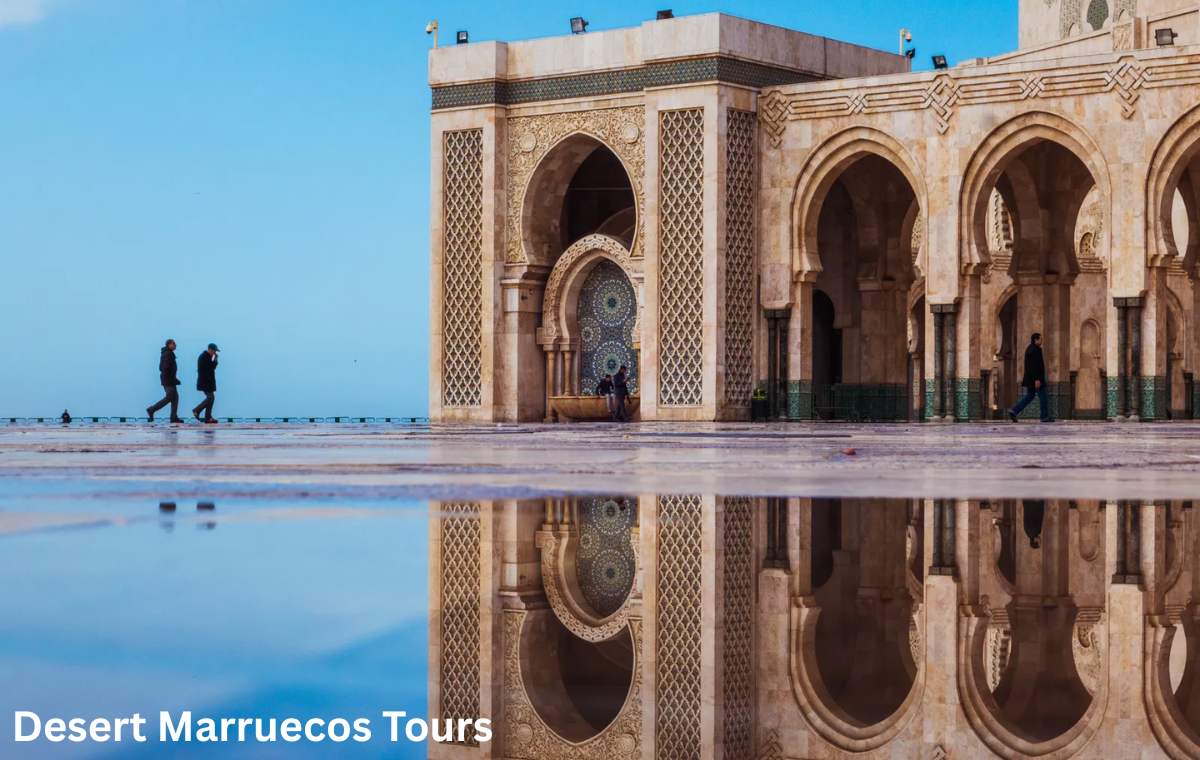
On dress codes: in major cities like Casablanca and Marrakech, Western clothing is generally fine. In rural areas, the mountains, and the desert, more modest dress – covered shoulders and knees – is appreciated. Non-Muslim visitors can’t enter most mosques; the Hassan II Mosque in Casablanca is the main exception.
Sample Morocco Itineraries by Season
Spring (7 days): Marrakech → High Atlas day trip → Sahara Desert (Merzouga) → Dades Valley → back to Marrakech or on to Fes. Our 5-day Marrakech desert tour covers the core of this route if you’re short on time.
Autumn (10–12 days): Marrakech → Sahara Desert → Dades Valley and Ouarzazate → Fes → Chefchaouen, timed for October’s peak desert conditions. This mirrors our 12-day Morocco itinerary.
Winter (7–8 days): Marrakech → Agafay or Sahara Desert in a heated luxury camp → Casablanca, built around shorter daylight hours and the lowest prices of the year – close to our 8-day Casablanca desert tour.
Summer coastal (7 days): Casablanca → Essaouira → Agadir → Taghazout, staying on the Atlantic side the entire way to dodge the inland heat.
Frequently Asked Questions – Best Time to Visit Morocco
What is the best month to visit Morocco?
April, May, September, and October are consistently rated the best months, with comfortable temperatures across Marrakech, Fes, the Sahara, and the Atlas Mountains, plus manageable rainfall.
Is Morocco too hot in summer?
Yes, inland Morocco is too hot for most travelers in July and August, when Marrakech and Fes regularly exceed 40°C and the Sahara can reach 45–50°C. The Atlantic coast stays comfortable at 22–28°C.
What is the cheapest time to visit Morocco?
January, February, and November offer the lowest flight and hotel prices, typically 20–40% below peak spring and October rates.
Is October a good time to visit Morocco?
Yes – many travelers consider October the single best month, combining ideal desert temperatures, comfortable cities, and date-harvest season.
Is December a good time for Sahara tours?
Yes, with a caveat. Days are sunny and around 18–22°C, but nights drop to 0–5°C, so a well-insulated camp and warm layers matter as much as the daytime plan.
What is the rainiest month in Morocco?
December and January see the most rainfall, concentrated in northern Morocco; the Sahara stays largely dry even through winter.
Can you visit Morocco during Ramadan?
Yes. Daytime restaurant hours shrink in non-tourist areas, but evenings bring iftar meals, night markets, and a livelier atmosphere than most of the year.
How many days do you need in Morocco?
Seven days covers the highlights – Marrakech, a Sahara run, and one more stop. Ten to twelve days allows a fuller loop through the desert, Atlas Mountains, and imperial cities; our 10-day desert tour is built around that range.
Is Morocco good in winter?
Yes, particularly for budget travel – expect the lowest prices, thinnest crowds, snow in the Atlas Mountains, and clear desert skies for stargazing, offset by cold nights and patchy riad heating.
What is the hottest month in Morocco?
August is Morocco’s hottest month, narrowly ahead of July, with Marrakech regularly exceeding 40°C and the Sahara reaching 45–50°C.
When is the best time for surfing in Morocco?
October–March delivers the biggest, most consistent swells, particularly around Taghazout and Imsouane; June–September suits beginners better, with smaller, gentler waves.
Is spring or autumn better for Morocco?
Both are excellent. Spring brings blooming landscapes and a heavier festival calendar; autumn brings fewer crowds, harvest season, and marginally more stable weather. Most repeat visitors lean slightly toward autumn for consistency.
Is Marrakech too hot in July?
Yes. Expect 37–45°C, with the medina’s stone walls holding heat into the evening – plan sightseeing for early morning and after sunset.
Going to Marrakech in June – is it a mistake?
Not necessarily. June runs 32–38°C, hot but manageable with an early start, midday pool time, and evening activities; it’s noticeably milder than July or August.
Can you survive the Sahara Desert in July?
Technically yes, but it isn’t recommended. Daytime temperatures of 42–48°C bring real heat-exhaustion risk, and most reputable operators reduce or pause luxury camp operations that month.
Marrakech weather: August vs. September?
August averages around 37–45°C; September cools to roughly 22–32°C, making September dramatically more comfortable for walking-heavy sightseeing.
Is the Sahara Desert freezing at night in January?
Yes. Overnight temperatures commonly fall to 0–5°C, so a heavy blanket and a well-insulated tent matter as much as your daytime plans.
Do Moroccan riads have heating in winter?
Not always. Many traditional budget riads rely on thick walls rather than central heating; ask specifically about a heat-mode AC unit before booking a winter stay.
What is the worst time to visit Morocco?
Late July into August, unless you’re staying coastal – the combination of extreme inland heat, reduced desert-camp operations, and peak coastal crowds and prices makes it the hardest window to plan a well-rounded trip around.
Best month to climb Mount Toubkal?
May, June, September, and October offer the most stable conditions, once winter snow has cleared from the approach but before summer heat sets in at lower elevations.
What’s the best time to visit Morocco from the UK or Europe?
The same windows apply regardless of departure point – April, May, September, and October – though UK and European travelers often find November and February fares cheapest for a winter-sun break.
When Should You Visit Morocco?
| Purpose | Best Time |
|---|---|
| General sightseeing | March–May, September–November |
| Sahara Desert tours | October–April (peak: October–November, March–May) |
| Beaches & surfing | June–September for beach; October–March for surf |
| Hiking & trekking | April–June, September–October |
| Fewer crowds | January, February, November |
| Cheapest travel | January, February, November |
| Cultural festivals | February–June, September |
Morocco genuinely works year-round, and every season trades something for something else – heat for empty medinas, cold desert nights for clear stargazing skies, crowds for blooming valleys. If there’s one experience worth building your dates around regardless of month, it’s watching the sun rise and set over the Sahara’s dunes; it’s the moment most travelers remember longest after the trip ends.
When you’re ready to put real dates on the calendar, browse our full range of Morocco desert tours and we’ll help you match the itinerary to the season that actually fits you.