
The classic 14-day Morocco travel itinerary runs Casablanca → Rabat → Chefchaouen → Fes → Merzouga (Sahara Desert) → Todra Gorge → Dades Valley → Aït Benhaddou → Marrakech → Essaouira → Casablanca. It combines four imperial cities, one Sahara Desert camp, the High Atlas mountain crossing, and two coastal days, using roughly 6–7 hours of driving on its longest single day (Fes to Merzouga).
Why This Is the Route Most Moroccan Operators Default To
A 14-day Morocco travel itinerary is the route most Moroccan tour operators default to when a client says “show me everything” – because it is the shortest loop that fits every major region without a rushed pace. This guide breaks the route into day-by-day stages with exact driving times, explains why 14 days works better than 10, covers the direction logic, and tells you where to sleep at every stop along the way.
Unlike a single-city guide, this itinerary treats the trip as one continuous loop starting and ending in Casablanca, which keeps flight logistics simple and avoids one-way domestic transfers. You land once, collect your driver or rental car, and follow the loop clockwise through the north, east, south, and back up the Atlantic coast.
Why 14 Days Is the Right Length for Morocco
Fourteen days is enough time for three to four imperial cities, one to two nights in the Sahara Desert, a full crossing of the High Atlas, and two days of coastal relaxation – without back-to-back travel days that leave you too tired to enjoy each stop.
A 10-day version of this same route usually forces travelers to cut either Chefchaouen or Essaouira. A 7-day version cuts the desert loop down to a single night with almost no buffer for delays. A 12-day version can work but tends to mean one rushed day in Fes instead of two full days, which most travelers later regret. At 14 days, every stop on the loop gets the time it deserves.
| Trip Length | What You Cover | What Gets Cut |
| 7–8 days | Marrakech + Desert OR Fes + North only | Most of the country |
| 10–11 days | Marrakech + Fes + Desert | Coast or Chefchaouen |
| 12 days | Full loop at a faster pace | One full Fes day |
| 14 days | Full loop at a comfortable pace | Very little |
| 15–16 days | Full loop at a relaxed pace | Nothing |
| 20+ days | Deep exploration + remote Atlas villages, Taroudant, Agadir | Nothing |
14-Day Morocco Travel Itinerary at a Glance
| Days | Route Segment | Driving Time |
| 1–2 | Casablanca → Rabat → Chefchaouen | ~1 hr + ~3.5 hrs |
| 3–4 | Chefchaouen → Volubilis → Meknes → Fes | ~2.5 hrs total |
| 5–6 | Fes (no driving – city days) | – |
| 7–8 | Fes → Ifrane → Azrou → Merzouga | ~6–7 hrs |
| 9–10 | Merzouga → Todra Gorge → Dades → Aït Benhaddou → Marrakech | ~6 hrs split over 2 days |
| 11–12 | Marrakech (city days) | – |
| 13–14 | Marrakech → Essaouira → Casablanca | ~3 hrs + ~4 hrs |
Which Direction Should You Drive the Loop?
The north-first direction (Casablanca → Chefchaouen → Fes → Desert → Marrakech → Coast → Casablanca) is recommended for most travelers for three reasons. First, it builds naturally from the calm blue alleys of Chefchaouen through the intensity of the Fes medina to the dramatic Sahara climax, finishing with the energy of Marrakech and the wind-swept calm of Essaouira.
The south-first direction (Marrakech → Desert → Fes → Chefchaouen → Casablanca) works cleanly if your flight lands in Marrakech or if you want to reach the Sahara while your energy is highest. Some experienced Morocco travelers prefer this direction because the coast finish is replaced by the calmer Chefchaouen ending, which feels less rushed before flying home.
Both directions cover exactly the same stops. The choice is almost entirely personal preference and flight logistics.
Full Driving Distance and Time Reference
| Leg | Distance | Driving Time |
| Casablanca → Rabat | 90 km | 1 hour |
| Rabat → Asilah (optional) | 180 km | 2.5 hours |
| Asilah → Chefchaouen | 110 km | 1.5 hours |
| Rabat → Chefchaouen (direct) | 250 km | 3.5–4 hours |
| Chefchaouen → Volubilis | 200 km | 2.5 hours |
| Volubilis → Meknes | 30 km | 30 minutes |
| Meknes → Fes | 60 km | 1 hour |
| Fes → Ifrane | 65 km | 1 hour |
| Ifrane → Azrou | 15 km | 20 minutes |
| Azrou → Midelt | 120 km | 1.5 hours |
| Midelt → Merzouga | 220 km | 2.5 hours |
| Merzouga → Erfoud | 55 km | 35 minutes |
| Erfoud → Todra Gorge | 120 km | 1.5 hours |
| Todra Gorge → Boumalne Dades | 55 km | 1 hour |
| Boumalne Dades → Ouarzazate | 120 km | 2 hours |
| Ouarzazate → Aït Benhaddou | 30 km | 30 minutes |
| Aït Benhaddou → Marrakech (Tizi n’Tichka) | 185 km | 3 hours |
| Marrakech → Essaouira | 175 km | 2.5 hours |
| Essaouira → El Jadida | 200 km | 2.5 hours |
| El Jadida → Casablanca | 100 km | 1 hour |
How to Get Around: Transport Options
Transport is the single most consequential decision on a 14-day Morocco trip because the desert and mountain legs are not served by rail.
| Option | Typical Cost | Best For | Limitation |
| Private driver-guide | $80–150/day | Groups of 2–6, first-timers | Higher total cost |
| ONCF Train | $10–30/leg | Casablanca–Rabat–Fes–Marrakech | No train to Sahara |
| CTM / Supratours bus | $5–20/leg | Budget travelers, flexible schedule | Very long journey times |
| Self-drive rental car | $30–60/day + fuel | Confident drivers, maximum flexibility | 4×4 needed near desert |
The practical solution most first-timers use: trains between Casablanca, Fes, and Marrakech for the city-to-city legs, and a private driver hired specifically for the Fes-to-Merzouga and Merzouga-to-Marrakech legs. This hybrid approach keeps the overall transport cost significantly lower than hiring a driver for all 14 days while still covering the desert and mountain legs comfortably.
The Day-by-Day Route in Full Detail
Days 1–2: Casablanca and the Drive North to Chefchaouen
Day 1 – Casablanca
Arrive at Mohammed V International Airport and collect your SIM card at the arrivals hall. Maroc Telecom gives the best rural and desert coverage, which matters later on the Fes-to-Merzouga leg. Check into your hotel and spend the afternoon at the Hassan II Mosque – the third-largest mosque in the world, built partly on a platform over the Atlantic Ocean, with a retractable roof and capacity for 25,000 worshippers inside.
Non-Muslim visitors enter on guided tours at fixed daily times. Walk the Corniche seafront, explore the French-colonial arcades of the Habous Quarter for pastries and fresh orange juice, and eat your first Moroccan dinner here.
Day 2 – Rabat and the Drive to Chefchaouen
Leave Casablanca early and drive one hour north to Rabat, Morocco’s capital. See the Hassan Tower, an unfinished 12th-century minaret originally planned as the world’s tallest, now standing as a field of carved columns beside the Mausoleum of Mohammed V. Walk through the Kasbah of the Udayas, a fortified riverside neighborhood with Andalusian gardens and whitewashed lanes above the Bou Regreg estuary.
Optional intermediate stop: Asilah, a beautifully preserved whitewashed coastal town 180 km north of Rabat with vivid murals painted on its old medina walls. Adding Asilah adds about 1.5 hours of total driving but is worth it if you are not pressed for time.
Day 3: Chefchaouen – The Blue Pearl of the Rif Mountains
Spend the full day inside the blue-washed medina of Chefchaouen, set in a valley between two peaks of the Rif Mountains at roughly 600 meters altitude. Walk Rue Targhi and Rue Lalla el Hora before 8 am, when the light is golden and the lanes are empty. The distinctive blue paint has been linked to the town’s former Jewish community, who painted walls to symbolize the sky and heaven, and the tradition has continued since.
Climb the 20-minute footpath above the town to the Spanish Mosque for the definitive panoramic photograph of blue rooftops against green mountains. Visit the Uta el-Hammam Square, the main plaza with its tall square mosque tower, shaded café terraces, and the ruined walls of a Portuguese-era fort. At the eastern edge of the medina, the Ras el-Maa stream and waterfall is where local women wash wool in the cold mountain water.
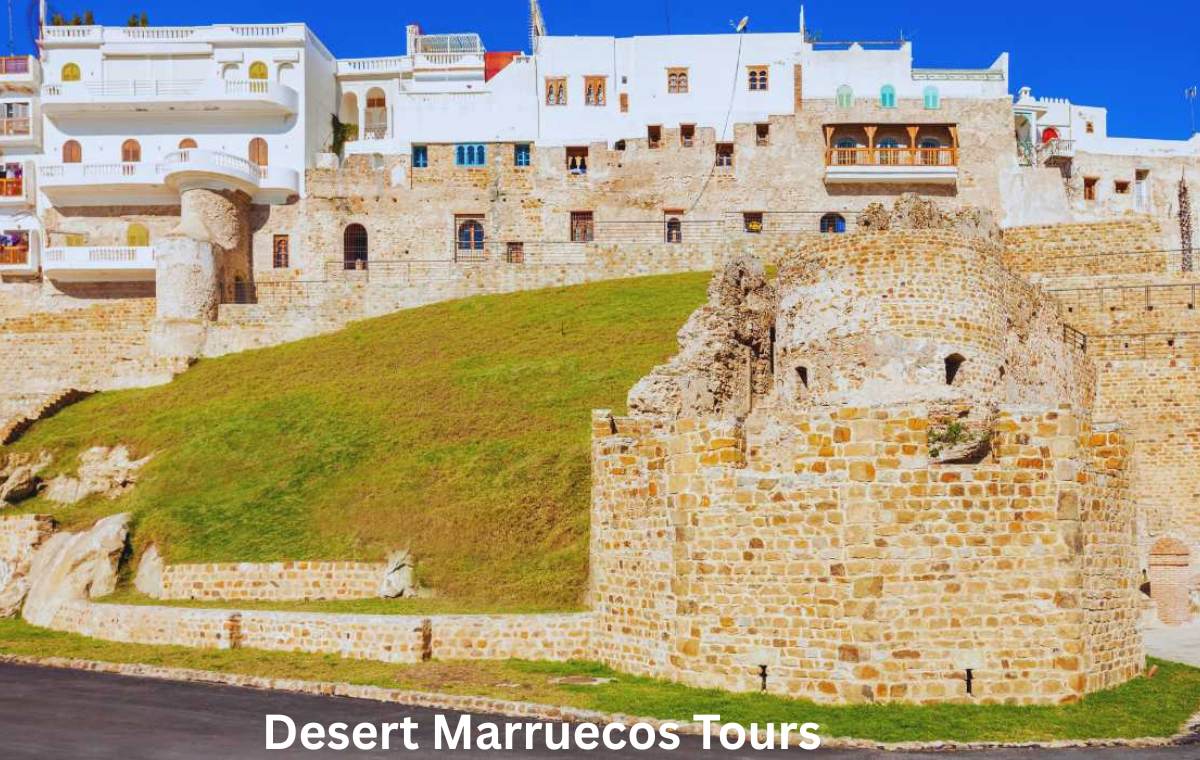
Day 4: Volubilis, Meknes, and Arrival in Fes
Drive south from Chefchaouen and stop at Volubilis, Morocco’s best-preserved Roman archaeological site and a UNESCO World Heritage listing. The ruins date to the 1st–3rd centuries AD and include a triumphal arch, mosaic floors depicting Bacchus, Orpheus, and sea creatures, and the remains of ancient olive presses that once supplied oil across the Roman Empire. Allow 90 minutes to walk the full site.
From Volubilis, drive 30 minutes to Meknes, the least-visited of Morocco’s four imperial cities and arguably the most rewarding for that reason. See the enormous Bab Mansour gate, widely considered one of the finest decorated gates in North Africa, and walk to Place el-Hedim, Meknes’ version of Jemaa el-Fnaa.
Visit the Moulay Ismail Mausoleum (one of the few Islamic shrines in Morocco open to non-Muslim visitors) and the massive Heri es-Souani royal stables, built to house 12,000 horses. Drive one hour east to Fes and check into a riad inside the old medina walls.
Days 5–6: Fes – The Living Medieval City
Fes el-Bali is the world’s largest car-free urban area, with over 9,000 lanes, alleys, and passages. A licensed local guide is not optional here. It is the only reliable way to navigate without getting lost and the difference between seeing the highlights in a logical sequence versus stumbling through the same corner repeatedly.
Day 5 morning: Start at Bab Bou Jeloud, the ornate blue-tiled gate at the medina entrance, and walk down Talaa Kebira, the main artery of the old city. Reach the Chouara Tannery, the largest of three working tanneries in Fes, where leather has been dyed in stone vats using natural pigments since the 11th century. Buy a mint sprig from the leather shops above – you will want it when the smell hits.
Continue to Al-Qarawiyyin University, founded in 859 AD and recognized as the world’s oldest continuously operating university. Visit the Bou Inania Madrasa, a 14th-century Quranic school with intricate carved cedarwood screens, zellige tilework covering every lower surface, and white stucco rising to the ceiling above it. Walk to the Attarine Madrasa, the Nejjarine Fountain, and the adjoining Museum of Wooden Arts and Crafts. Finish the afternoon in the Mellah, the old Jewish Quarter, where Star of David carvings and Hebrew inscriptions remain on doors and walls.
Day 6: Spend the morning in the named souks of Fes – Souk El Attarine (perfumes, spices, and incense), the leather souk, the carpet souk, the brass and copper souk (Souk Haddadine), and the textile souk.
Book a Moroccan cooking class inside a traditional riad in advance: most run three to four hours, teach tajine, bastilla, harira, and mint tea, and end with lunch. In the afternoon, visit Jnan Sbil Gardens for a quiet break from the medina’s density, then find a rooftop terrace for dinner with a view over the city’s minarets.
Day 7: The Long Drive – Fes to the Sahara Desert
This is the longest and most dramatic driving day of the entire loop. Leave Fes early – 7 am ideally – and climb through the Middle Atlas to Ifrane, a neat European-style alpine town at 1,665 meters altitude sometimes called the Switzerland of Morocco for its red-roofed chalets and clean streets. Continue to the cedar forests around Azrou, where wild Barbary macaques – an endangered primate endemic to North Africa and Gibraltar – sit along the roadside and in the trees.
Stop in Midelt for lunch. The town is known for apple orchards, fossil shops, and wool blankets. Descend through the spectacular Ziz Valley, a narrow river gorge lined with date palm oases cutting through bare red rock, and pass through Errachidia before the final run south through open desert hammada (rocky flatlands) to Merzouga. The giant orange wall of the Erg Chebbi sand dunes becomes visible on the horizon about 20 km before town – one of the most anticipated views of any Morocco itinerary.
Day 8: Merzouga and Erg Chebbi – The Sahara Desert
Wake before dawn and walk or take a short camel ride to the crest of the nearest dune to watch sunrise turn the sand from grey to gold to deep orange. After breakfast, take a 4×4 excursion across the desert interior to Khamlia village, home to a community descended from sub-Saharan Africans who maintain the Gnawa music tradition – a hypnotic spiritual practice using iron castanets, bass lutes, and rhythmic chanting. Most tours include a short live music session inside a family home, which is one of the most memorable experiences of any Sahara visit.
In the late afternoon, mount a camel for the sunset trek (1.5–2 hours) into the dunes and arrive at your desert camp before the sky darkens. Eat dinner by firelight, listen to Berber drumming, and sleep in your tent under some of the darkest skies in North Africa.
Desert camp tiers – what separates a $80 night from a $400 night:
| Camp Type | Cost per Night | What Is Included |
| Budget tent | $25–50 | Shared tent, basic dinner, communal bathrooms |
| Standard camp | $80–150 | Private tent, dinner, live music, shared bathroom |
| Luxury camp | $200–500+ | Ensuite tent, gourmet dinner, private terrace, hot shower |
Camel trek options:
| Trek Type | Duration | Cost per Person | Best For |
| Short sunset ride | 45–60 minutes | $15–25 | Photography, families |
| Standard camp trek | 1.5–2 hours | $40–70 | First-timers, couples |
| Overnight deep desert | 5–8 hours | $100–200 | Adventure travelers |
Day 9: Todra Gorge, Dades Valley, and the Road of a Thousand Kasbahs
Drive west from Merzouga and stop in Erfoud to walk through fossil shops – trilobites and ammonite carvings embedded in polished stone are the regional specialty. Arrive at Todra Gorge, where 300-meter-high vertical canyon walls narrow to a corridor just 10 meters wide with a cold river running through the base. Walk the gorge floor (flat, easy, 30 minutes each way) and eat lunch at a small riverside café where fresh trout from the stream is the house specialty.
Continue west to Boumalne Dades and up into the Dades Gorge, where wind-sculpted rock towers called Monkey Fingers rise from the canyon floor and the road winds through dramatic switchbacks. If traveling in late April or May, the route passes through Vallée des Roses near El Kelâa M’Gouna, where fields of Damask roses are harvested for rosewater and rose oil sold at roadside cooperatives. Drive through Skoura, a dense palm oasis dotted with crumbling kasbahs visible from the road, and reach Ouarzazate for the night.
Day 10: Aït Benhaddou, Atlas Studios, and the Tizi n’Tichka Crossing to Marrakech
Spend the morning at Aït Benhaddou, a UNESCO World Heritage mud-brick ksar (fortified village) built in tiers on a hillside above a seasonal river. Cross on stepping stones or the wooden footbridge, climb through the narrow lanes to the top of the ksar for panoramic views across the Draa Valley, and photograph the golden mud walls, ancient granaries, and storks nesting on the ramparts. Aït Benhaddou has appeared in Gladiator, Game of Thrones, The Mummy, and dozens of other major productions filmed at Atlas Studios in nearby Ouarzazate – the largest film studio complex in the world, open for guided tours.
After Aït Benhaddou, the road climbs the Tizi n’Tichka pass, the highest paved mountain pass in Morocco at 2,260 meters. The road is paved and well-maintained but includes tight switchbacks and sharp drops on both sides. Temperature drops noticeably at the summit even in summer, and in winter or early spring the pass can carry snow – check conditions before departing Ouarzazate. Small Berber villages along the descent sell argan oil, amethyst crystals, and fossil slabs. Arrive in Marrakech by early evening.
Days 11–12: Marrakech – The Red City
Day 11: Arrive at Jemaa el-Fnaa square by 8 am for the quietest version of the experience before the snake charmers, storytellers, and orange juice sellers fill every square meter. Walk to the Koutoubia Mosque, the 12th-century landmark visible from across the city, then tour the Bahia Palace with its painted cedarwood ceilings, zellige courtyards, and garden rooms. Visit the Saadian Tombs, rediscovered in 1917 after being sealed for centuries behind a wall – the golden chamber is one of the finest examples of Saadian dynasty decorative art in Morocco. See the ruins of the El Badi Palace and walk through the Ben Youssef Madrasa, a 14th-century Islamic school with the most intricately decorated interior in Marrakech. Return to Jemaa el-Fnaa in the evening as it transforms into a vast open-air food court.
Day 12: Start at Jardin Majorelle, the cobalt-blue garden designed by French painter Jacques Majorelle and later restored by Yves Saint Laurent, which now houses the Berber Museum and the Museum of Islamic Art. Spend midday in the named medina souks – Souk Semmarine (the main bazaar artery), Souk El Attarine (perfumes and spices), Souk Cherratine (leather), Souk des Babouches (slippers), Souk Haddadine (blacksmiths), and Souk Chouari (carpentry). Book a traditional hammam session in the afternoon. For travelers with a free morning, Ouzoud Waterfalls (2.5 hours from Marrakech, 110-meter cascade with wild Barbary macaques in the trees) and the Agafay Desert (1 hour from Marrakech, rocky moonscape without sand dunes) are the best half-day excursions from the city.
Day 13: Essaouira – The Atlantic Coast
Drive 2.5 hours west to Essaouira, a UNESCO-listed Atlantic port town inside 18th-century fortifications. Walk the Skala de la Ville sea ramparts with their bronze cannons aimed at the ocean, then head to the fishing harbor where blue boats line up and grill men cook the morning catch on charcoal by noon. The medina is calmer and less intense than Marrakech – white and blue walls, wind-sculpted streets, craftsmen carving thuya wood into boxes and chess sets, and the smell of salt and sawdust mixed together.
Essaouira carries deep connections to Gnawa music (the annual Gnawa World Music Festival draws international crowds) and a storied cultural link to Jimi Hendrix, who visited the nearby village of Diabat in 1969. The beach south of town is one of the best kitesurfing and windsurfing venues in Africa. Buy thuya wood, argan oil, blue pottery, or hand-woven Berber textiles, and eat grilled sardines at the port stalls or dinner at Chez Sam, the legendary harborside fish restaurant.
Day 14: Coastal Drive to Casablanca and Departure
Drive north along the Atlantic coast. If your flight schedule allows, stop at El Jadida, a coastal town with a remarkable Portuguese Cistern – a vaulted stone chamber with thin water on the floor reflecting the columns above in perfect symmetry. El Jadida is a UNESCO World Heritage site that almost no Morocco itinerary article includes, making it a genuine hidden highlight. Continue through Azemmour, a quiet whitewashed riverside town, and arrive at Casablanca Mohammed V International Airport in time for your departure.
Where to Stay on a 14-Day Morocco Itinerary
| Stop | Accommodation Type | Budget Range |
| Casablanca | Business hotel or boutique riad | $50–200/night |
| Chefchaouen | Traditional guesthouse inside the medina | $40–120/night |
| Fes | Medina riad (essential for the experience) | $60–250/night |
| Merzouga | Desert camp or maison d’hôte | $30–500/night |
| Ouarzazate / Dades Valley | Kasbah-style hotel | $50–150/night |
| Marrakech | Medina riad with rooftop terrace | $60–600/night |
| Essaouira | Medina guesthouse or riad | $50–200/night |
The single most important accommodation decision on this loop is the Fes riad. Staying inside the medina walls – rather than in a modern hotel outside – changes the entire experience of the city. Wake up to the call to prayer echoing through narrow lanes, step directly into the souk from your courtyard, and have breakfast on a rooftop above the roofscape of the oldest medieval city in North Africa.
What to Pre-Book and When
| Item | How Far in Advance |
| Luxury desert camp in Merzouga | 4–6 weeks (peak season: March–May, October–November) |
| Licensed Fes medina guide | 2–4 weeks |
| Riad in Chefchaouen medina | 3–4 weeks |
| Cooking class (Fes or Marrakech) | 1–2 weeks |
| Hammam session in Marrakech | 1 week |
| Atlas Studios tour in Ouarzazate | Book on arrival or 1 week ahead |
How Much Does a 14-Day Morocco Trip Cost?
| Category | Budget | Mid-Range | Luxury |
| Accommodation per night | $20–40 | $60–120 | $200–600+ |
| Food (3 meals per day) | $10–20 | $30–50 | $80–150 |
| Transport per day | $20 shared | $80–100 | $130–200 |
| Activities and entry fees | $5–15 | $20–40 | $50–150+ |
| Daily total | $55–95 | $190–310 | $460–1,100+ |
| 14-day total per person | $770–1,330 | $2,660–4,340 | $6,440–15,400+ |
Practical Planning Essentials During Morocco Tour
Visa and Entry
Morocco is visa-free for citizens of the US, UK, EU, Canada, Australia, and most Western nations for stays up to 90 days. Your passport must be valid for at least six months from your arrival date.
Currency and Cash
Morocco uses the Moroccan dirham (MAD). Cash is essential for souks, medina stalls, taxis, tips, and smaller riads. ATMs are widely available in Casablanca, Rabat, Fes, and Marrakech but scarce around Merzouga and the Dades Valley. Withdraw enough cash in Fes to cover the entire desert stretch before leaving for Merzouga.
SIM Card
Buy a prepaid SIM card at the arrivals hall in Casablanca. Maroc Telecom has the best rural and desert coverage. Orange Morocco and Inwi work well in cities but can drop coverage in mountain valleys and remote desert areas.
How to Adapt This Itinerary for Different Travelers
Couples and honeymooners: Add a second night in Essaouira for a sunset seafood dinner on the ramparts. Upgrade to a riad with a private plunge pool in Marrakech. Book a private hammam session for two and a private sunrise camel ride in Merzouga rather than joining a group trek.
Families with children: The Azrou cedar forest and Barbary macaques are consistently a highlight for children. Atlas Studios in Ouarzazate with its Gladiator and Game of Thrones sets holds older children’s attention well. Limit camel rides to 45 minutes for young children. Consider the Agafay Desert as a shorter, closer alternative to the long Day 7 drive to Merzouga.
Solo travelers: The hybrid transport approach – trains between cities, private driver for the desert legs – is ideal for solo travelers on a mid-range budget. Stay in riad dorms or hostel-style guesthouses in Marrakech and Chefchaouen to meet other travelers. Join a small group for the Fes medina day.
Luxury travelers: La Mamounia in Marrakech, Riad Laaroussa or Palais Faraj in Fes, and Azalai Desert Lodge in Merzouga turn this same 14-day loop into a genuinely premium experience without altering the route at all.
Frequently Asked Questions
Is 14 days enough to see Morocco?
Yes, for a first trip. Fourteen days covers the imperial cities, the Sahara Desert, the High Atlas crossing, and the Atlantic coast at a comfortable pace – without the back-to-back travel days that shorter itineraries force.
Can I start in Marrakech and end in Casablanca?
Yes. The route reverses cleanly. Some travelers prefer the south-first direction to reach the Sahara while energy is highest, finishing with the calm of Chefchaouen before flying home from Casablanca.
Is this itinerary suitable for first-time visitors to Morocco?
Yes. It is the standard route most Moroccan operators build for first-timers because it covers every major region – imperial cities, desert, mountains, and coast – in a logical clockwise loop.
How many days should I spend in the Sahara on a 14-day trip?
One to two nights in Merzouga is standard. One night covers a camel trek, a desert camp, and a dune sunrise. Two nights allows a 4×4 excursion and a visit to Khamlia village as well, without rushing.